Start with the door-to-door journey
A headline journey time leaves out the walk to the station, the platform search and the trip to your next room. Compare the whole moving day before deciding how much distance is reasonable. A slightly longer direct service can be easier than a fast route with a demanding change.
Check station names carefully. Some cities have several major stations, and a connection may involve crossing the city. If you are traveling with children, have access requirements or simply dislike rushing, allow more time than a booking engine’s minimum.
Tickets and passes solve different problems
Point-to-point tickets can suit a fixed route with a few planned journeys. A pass may suit a flexible trip with several travel days, but it does not automatically remove reservation requirements or extra charges. Compare the total cost of the journeys you actually intend to take, including reservations and any relevant booking fees.
Read the change and refund conditions before paying. A cheaper ticket may be tied to a particular service. Keep booking confirmations accessible offline and make sure the name and passenger details match the operator’s requirements.
Make connection time useful
A generous change is not wasted time if you can use it calmly. Locate the next departure first, then get food or step outside only if the timing allows. On an unfamiliar international journey, avoid stacking a tight train change, hotel check-in and timed dinner into the same evening.
The last-train question
If this connection fails, what happens next? Ask that before booking the last workable departure of the day. Sometimes an overnight stop is the simplest way to protect the trip.
Choose comfort over theoretical efficiency
Bring luggage you can lift and handle yourself. Storage arrangements vary, and an older station or carriage may involve steps. Keep valuables with you and leave aisles clear. For overnight services, compare the actual sleeping arrangement rather than assuming every night train offers a private room.
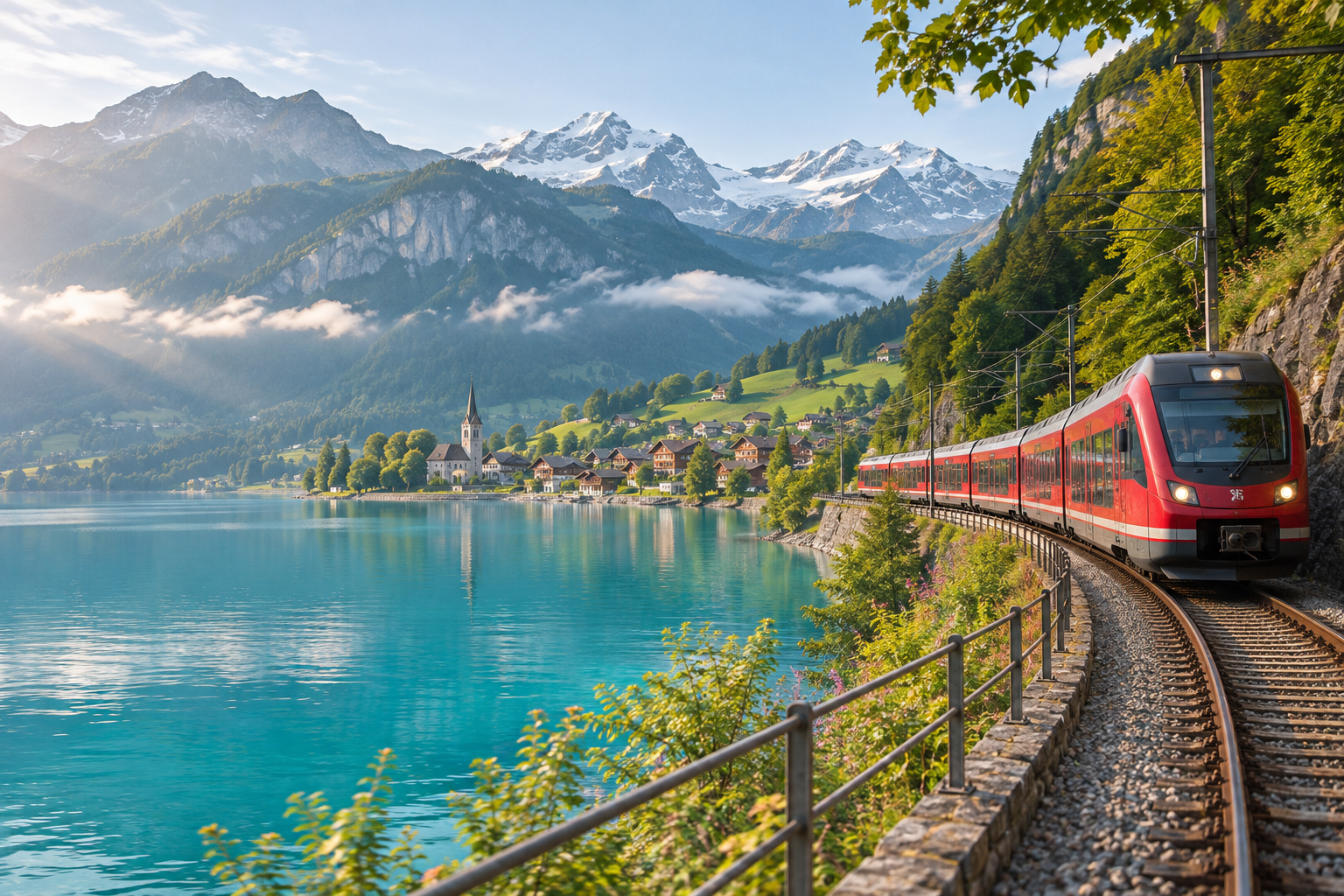
A scenic journey deserves daylight. If the landscape is the reason for the route, check the approximate daylight window for your travel dates and leave time to enjoy it. The view should not be an afterthought squeezed between two rushed appointments.
Verify close to departure
Timetables, engineering work and service conditions can change. Use the relevant operator’s current information for your exact date and check again before travel. This guide explains a planning approach; it does not provide live schedules, fare quotes or guaranteed connections.
Put it into practice with our northern Italy route or a Lisbon-and-Porto journey. If the draft feels too complicated, return to the notebook and remove a base.